
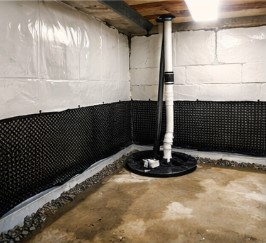
The air quality in your upper living areas is deeply influenced by the condition of your basement through a process known as the stack effect. As warm air rises and escapes through the attic, it pulls replacement air upward from the lowest level of the structure, bringing whatever is in your basement along with it.
Investing in basement waterproofing is therefore not just about a dry floor, but about ensuring the air circulating through your bedrooms and kitchen is clean. When you address moisture issues at the source, you stop the migration of pollutants before they ever reach your family.
Eliminating the Source of Musty Odors
The classic “basement smell” is actually the byproduct of microbial volatile organic compounds released by damp masonry and organic materials. These odors are a direct signal that moisture is trapped within the porous surfaces of your foundation.
- Seal porous concrete walls with high-grade vapor barriers to prevent the “earthy” smell of damp soil from entering the home.
- Remove any water-damaged wood or carpeting that has absorbed odors over time.
- Ensure all floor drains have a functional P-trap to prevent sewer gases from venting into the basement air.
By removing the dampness that fuels these odors, you transform the basement into a neutral-smelling space that doesn’t taint the rest of the house.
Mitigating Dust Mite and Allergen Proliferation
Dust mites are one of the leading triggers for asthma and seasonal allergies, and they thrive in environments with high humidity. Waterproofing lowers the ambient moisture levels, making it nearly impossible for these microscopic pests to survive.
- Keep relative humidity levels below fifty percent to dehydrate dust mite populations and prevent their reproduction.
- Use a professional-grade dehumidification system that filters fine particulates out of the air.
- Eliminate damp cardboard boxes, which act as both a food source and a moisture reservoir for allergens.
Lowering the humidity through proper waterproofing creates a respiratory-friendly environment for every inhabitant of the home.
Preventing the Spread of Airborne Spores
When a basement is damp, mold and mildew can colonize behind walls and under flooring, releasing millions of spores into the air. Because of the aforementioned stack effect, these spores are carried upward, compromising the air quality in every room.
- Install an interior drainage system to ensure that ground seepage never sits on the floor to evaporate.
- Repair foundation cracks with pressurized injections to block the entry point for moisture and outdoor spores.
- Replace fiberglass insulation that has become damp, as it often hides fungal growth within its fibers.
A dry foundation serves as a structural shield, ensuring that harmful biological particles never have a chance to become airborne.
Reducing Soil Gas Infiltration
Waterproofing often involves sealing the interface between the floor and the walls, which is a common entry point for soil gases like radon. While waterproofing is not a substitute for a dedicated radon system, the sealing process significantly restricts the path of least resistance for these gases.
- Use a closed-cell seal on the “cove joint” where the basement wall meets the floor slab.
- Ensure sump pump basins are equipped with airtight lids to prevent soil gases from venting into the basement.
- Seal any penetrations in the floor for plumbing or electrical lines with expanding structural foam.
Tightening the basement envelope through waterproofing techniques provides an extra layer of protection against invisible contaminants originating in the earth.
Enhancing HVAC Efficiency and Air Cleanliness
An HVAC system located in a damp basement has to work significantly harder to condition moist, heavy air. This excess moisture can also lead to condensation and biological growth inside the ductwork itself, which then distributes pollutants throughout the home.
- Maintain a dry basement to prevent the air handler from pulling in damp, contaminated air for circulation.
- Insulate cold water pipes and ductwork to prevent “sweating” that drips onto floor surfaces.
- Change furnace filters more frequently during the waterproofing transition to capture any lingering dust.
A dry environment allows your heating and cooling system to move cleaner, lighter air, improving both your health and your monthly utility bills.
Investing in a Healthier Household Environment
Prioritizing your basement waterproofing needs is a proactive step toward a more breathable and vibrant home. When you secure the lowest point of your house, you elevate the quality of life for everyone living under your roof.
A clean, dry foundation is the cornerstone of a healthy residence and long-term property value. By taking these professional steps today, you ensure that the air your family breathes is as fresh as possible.