
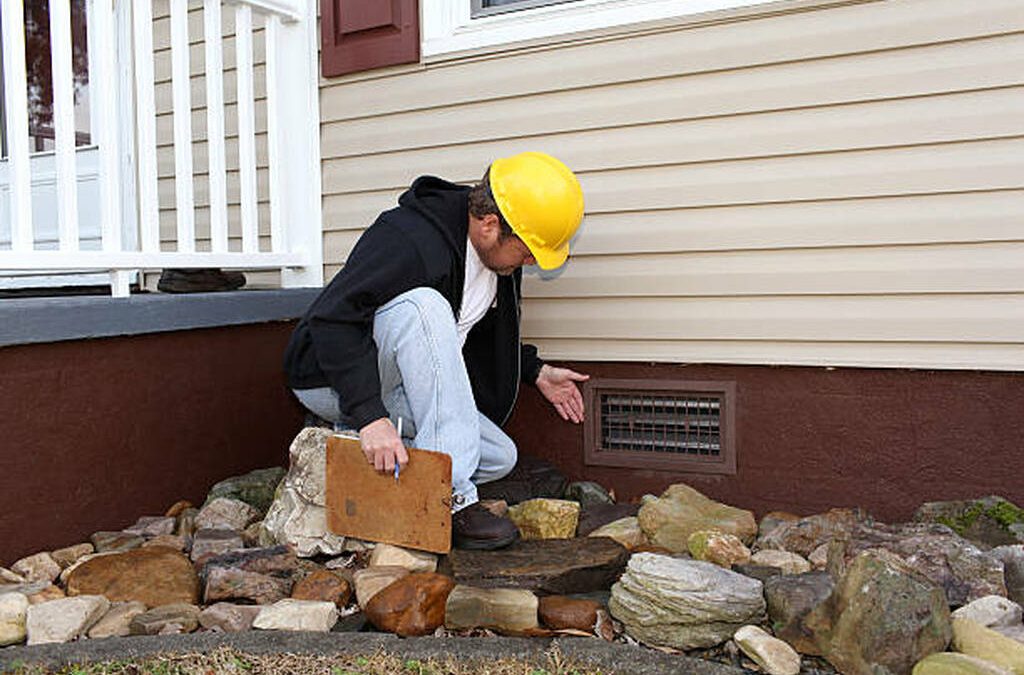
Distinguishing between natural house settling and significant structural failure is a vital skill for any homeowner concerned about their property’s longevity. While every house experiences some degree of movement over time, knowing when a shift becomes a threat to your safety is essential.
Professional waterproofers and foundation specialists look for specific physical markers to determine if a crawlspace requires localized stabilization or a more comprehensive structural overhaul. Understanding these differences allows you to make informed decisions and avoid unnecessary expenses while protecting your home’s value.
Analyzing Crack Patterns and Symmetry
The geometry of a crack often reveals the underlying cause of the movement. Natural settling usually results in small, vertical hairline fractures, whereas structural foundation failure often presents as aggressive, jagged, or stair-step patterns.
- Inspect exterior brickwork for “stair-step” cracks that follow the mortar lines, which usually indicate the foundation is dropping.
- Look for horizontal cracks along the foundation wall, as these often signal hydrostatic pressure and imminent wall failure.
- Monitor the width of the cracks; an opening wider than one-quarter of an inch typically suggests a serious structural shift rather than simple aging.
When cracks are diagonal and grow wider at one end, it is a clear sign that one part of the crawlspace is sinking faster than the rest.
Evaluating Door and Window Functionality
A home that is settling uniformly will usually keep its frames square, but foundation failure causes the frame to rack and tilt. This distortion is most easily identified by how the “moving parts” of your home interact with their openings.
- Check if doors swing open or closed on their own, which indicates that the floor and wall are no longer plumb.
- Note any windows that have become difficult to slide or lock because the frame has been compressed into a trapezoid shape.
- Watch for gaps at the top of door frames where the trim has pulled away from the wall.
These functional failures are more than just an inconvenience; they are early warning signs that the crawlspace supports are no longer providing a level base.
Inspecting Support Pier Integrity
Inside the crawlspace, the condition of the support piers provides direct evidence of the foundation’s health. Settling might cause a slight gap, but structural failure often involves the physical deterioration or tilting of these pillars.
- Look for “leaning” piers that have shifted off-center due to unstable soil or moisture intrusion.
- Check for “shimming” that has compressed or fallen out, leaving the floor beams unsupported and prone to sagging.
- Identify any moisture-related rot at the top of the piers where they meet the wooden floor joists.
A specialist will determine if the pier simply needs to be shimmed or if a new, deep-seated support system is required to reach stable soil.
Monitoring Floor Level and Sloping
A certain amount of floor unevenness can be expected in older homes, but a sudden or localized slope is a major red flag. Professionals use laser levels to map out exactly where the crawlspace is failing to hold its load.
- Walk across the center of rooms to feel for “soft spots” or “bouncing” that suggests the joists are no longer supported.
- Use a simple level or a ball on a hard floor to see if there is a consistent pull toward a specific exterior wall.
- Observe if the baseboards are pulling away from the floorboards, creating a visible gap.
Significant slopes usually point toward a localized collapse of a support member or a sinking perimeter footer that requires immediate intervention.
Assessing Soil and Drainage Conditions
The environment surrounding the foundation often dictates whether a problem is minor settling or a major repair need. Persistent water accumulation in a crawlspace changes the soil’s bearing capacity, turning a small settlement issue into a structural emergency.
- Inspect the crawlspace floor for “efflorescence,” a white salty powder that indicates chronic water penetration and weakening masonry.
- Look for “scouring” or visible paths where water has washed away the soil from beneath the footings.
- Identify areas where the soil is pulling away from the foundation, leaving a void that offers zero structural support.
If the soil is consistently saturated, any movement is likely to be progressive foundation failure rather than the finite process of settling.
Securing Your Home’s Future with Expert Diagnostics
Choosing to address foundation irregularities early prevents a minor settling issue from evolving into a catastrophic structural failure. A stable crawlspace ensures that every other component of your home, from the roof to the drywall, remains in perfect alignment.
By investing in professional diagnostics, you gain the clarity needed to maintain a safe and durable residence. Taking proactive steps today provides the permanent stability your home needs to stand tall for generations to come.