
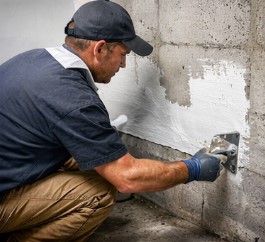
Many homeowners facing a damp basement reach for off-the-shelf sealants and waterproof paints as a quick, DIY fix. While these products promise an easy solution to moisture, they often mask deeper structural issues that require professional intervention.
The danger lies in the false sense of security these temporary patches provide while water continues to build up behind the scenes. Understanding why these “Band-Aid” solutions fail is crucial for protecting your home’s foundation and your family’s health.
Trapped Hydrostatic Pressure
External water pressure, known as hydrostatic pressure, can exert thousands of pounds of force against your basement walls. When you apply a sealant to the interior, you are not stopping the water; you are simply trapping it inside the porous concrete.
- Monitor for “efflorescence,” a white powdery substance that indicates water is still moving through the wall and dissolving minerals.
- Watch for bubbling or peeling paint, which signifies that water pressure has broken the bond between the sealant and the masonry.
- Check for “spalling,” where the surface of the concrete begins to flake or pop off due to internal moisture stress.
By trapping water within the wall, temporary sealants can actually accelerate the deterioration of the concrete blocks or poured walls.
False Security and Delayed Structural Repairs
Using a temporary sealant often leads homeowners to believe the problem is solved, causing them to ignore the actual cracks or shifts in the foundation. This delay allows minor settling issues to evolve into major structural failures that are much more expensive to repair.
- Inspect the exterior of your foundation for cracks even if the interior looks dry after painting.
- Note if doors or windows on the upper floors begin to stick, as this indicates the foundation is still moving despite the sealant.
- Compare the cost of a bucket of sealant to the potential cost of a full foundation piering project caused by neglect.
A cosmetic fix does nothing to stabilize a sinking or bowing wall, which remains a primary threat to the home’s overall stability.
The Growth of Hidden Mold and Mildew
Temporary sealants create a thin barrier that can trap moisture against organic materials like wooden studs or drywall furring strips. This dark, damp space becomes the perfect breeding ground for toxic mold that can stay hidden for years.
- Smells are often the first indicator; if the basement still smells musty after sealing, mold is likely growing behind the barrier.
- Use a moisture meter to check the levels of the baseplates and wall studs located behind the sealed masonry.
- Be aware that airborne mold spores can still travel through the rest of the home via the HVAC system.
Ignoring the root cause of moisture allows biological contaminants to compromise your indoor air quality and your family’s respiratory health.
Incompatibility with Professional Solutions
Once a DIY sealant has been applied, it can be extremely difficult and costly to remove when a permanent waterproofing system is eventually required. Most professional-grade membranes and injections require a clean, unpainted surface to bond correctly.
- Understand that contractors may have to sandblast or mechanically scrape your walls to remove old paint before they can start.
- Consider the extra labor costs associated with removing failed DIY products during a professional installation.
- Realize that some internal crack injections cannot be performed if the crack is clogged with topical hardware-store sealants.
The time and money spent on temporary fixes often end up increasing the total bill for the permanent solution later on.
Increased Long-Term Financial Burden
While a ten-dollar tube of caulk or a fifty-dollar can of paint seems economical today, the recurring cost of reapplying these products adds up. More importantly, the damage caused by unaddressed water infiltration can lower your property value significantly.
- Factor in the loss of home equity if you have to disclose unsuccessful DIY repairs during a home sale.
- Calculate the cost of replacing ruined flooring, furniture, and drywall when the temporary sealant inevitably fails during a heavy storm.
- Remember that most home insurance policies do not cover damage resulting from seepage or neglected maintenance issues.
Investing in a permanent drainage or stabilization system is the only way to ensure your basement remains a dry, usable, and valuable part of your home.
Investing in Permanent Structural Peace of Mind
Relying on temporary sealants for basement waterproofing needs is a gamble that rarely pays off for the homeowner. True protection comes from addressing the external and internal water pressure through engineered drainage and professional stabilization.
By choosing a permanent solution, you secure your home’s future and eliminate the stress of constant maintenance. A dry, stable foundation is a lasting investment that protects both your property’s structural integrity and your family’s well-being.